Tuckman’s stages of group development were difficult enough before. I’ve seen them a number of times and storming still catches me by surprise. The first phase is forming, when you bring a new team together and define goals and roles. As with all new beginnings, there’s some anxiety, but this is also one of the most exciting phases, full of possibilities.
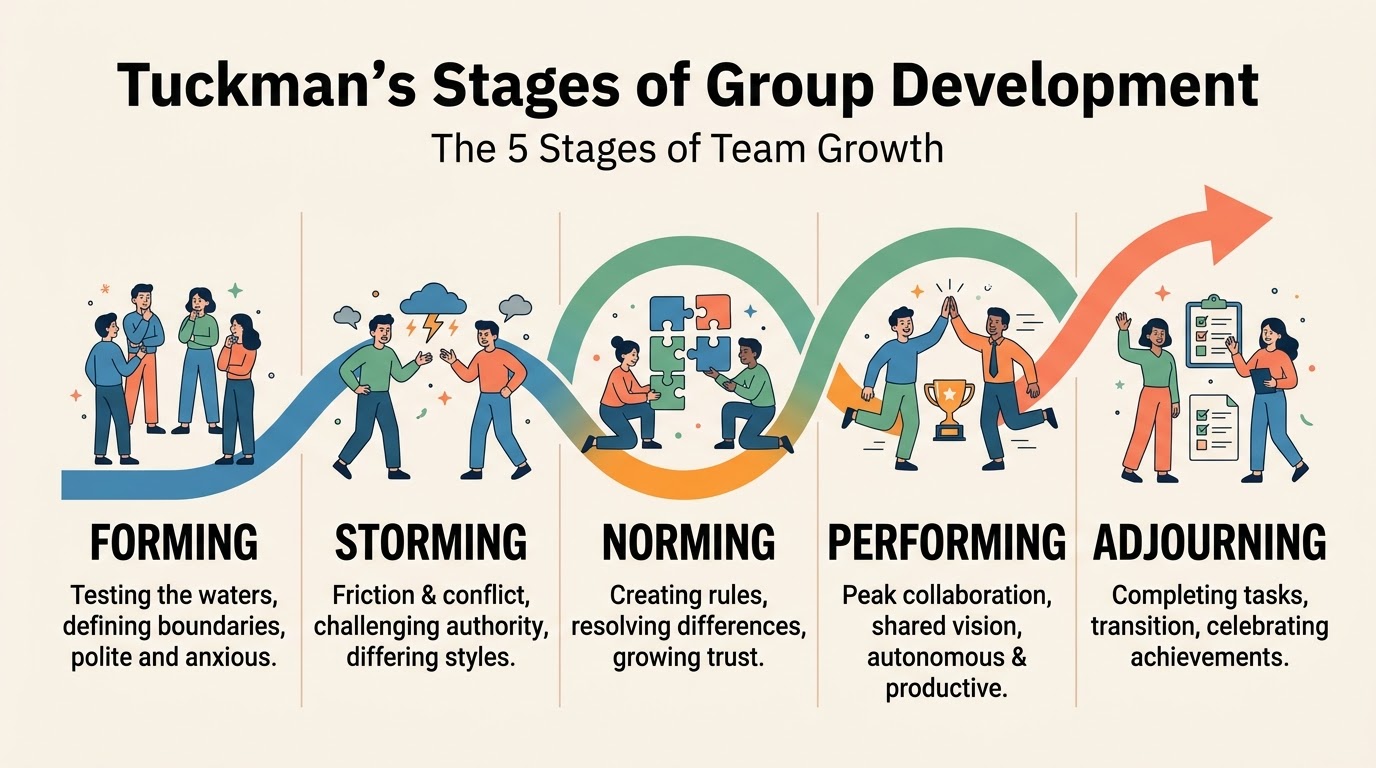
Now that roles and goals have been set, the team gets underway and discovers what their roles mean in the day-to-day work. Personalities on the team bump into each other and, before you know it, there are passive-aggressive comments and real tensions bubble up in meetings and Slack. Welcome to storming. This phase calls for calibration and compromise, and frequent reminders about the mission. If you know the model, you know that teams often go through this phase and it’s very likely temporary. If you haven’t come across the model, this phase is genuinely disorienting. With teams changing composition because of AI and skewing toward having more senior and fewer junior engineers, is storming getting more intense?
I’ve also been wondering lately if talking to coding agents all day is making this phase even more confusing for leads. Agents are just so darned compliant whereas humans need recognition and reassurance. They have identities built over years of working with other humans. It’s all so tedious compared to managing agents.
There is a growing body of evidence that interacting with bots makes humans less kind to each other:
… participants who worked on a creative task with AIs (versus purported humans) subsequently rated another purported human’s work more negatively. … These findings point to a potentially worrisome side effect of the exponential rise in human–AI interactions.
I don’t know if this using agents is making leaders more impatient with humans who are in a storming phase, but it’s worth paying attention to. Remember that humans, for all of their foibles, are still your most important stakeholders.
Sources
- Stein, J. (n.d.). Using the stages of team development. MIT Human Resources. https://hr.mit.edu/learning-topics/teams/articles/stages-development
- Tey, K. S., Mazar, A., Tomaino, G., Duckworth, A. L., & Ungar, L. H. (2024). People judge others more harshly after talking to bots. PNAS Nexus, 3(9), pgae397. https://doi.org/10.1093/pnasnexus/pgae397
- Brynjolfsson, E., Chandar, B., & Chen, R. (2026, August 12). No widespread displacement, but the AI employment gap for young workers has widened to 19%. Stanford Digital Economy Lab. https://digitaleconomy.stanford.edu/news/canariesaug26/



Leave a Reply